


The core sensing element of the HTS-SMP01 silicon resonant pressure sensors utilizes a tuning-fork resonator configuration, operating primarily through in-plane vibration. The vibration drive and signal detection system employs a non-contact electrostatic excitation and capacitive sensing scheme: an electrostatic voltage induces stable, periodic vibration in the tuning-fork resonator. When external pressure acts on the silicon diaphragm, the resulting deformation alters the resonator's natural frequency; a capacitive detection unit precisely captures changes in vibration amplitude and frequency. An integrated closed-loop feedback control circuit adjusts the excitation voltage in real-time to maintain resonance stability and applies hardware-based compensation for temperature and nonlinearity errors. The final output is a frequency signal linearly correlated with the measured pressure, ensuring excellent linearity and high data repeatability.
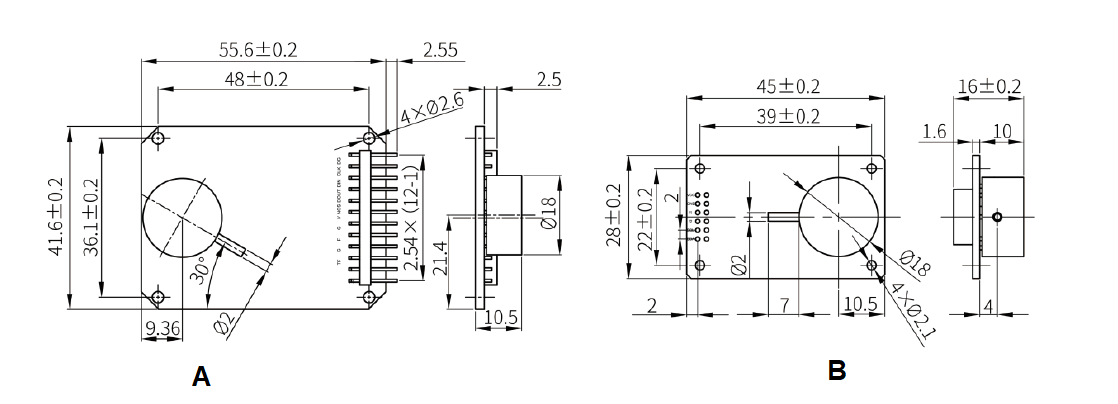
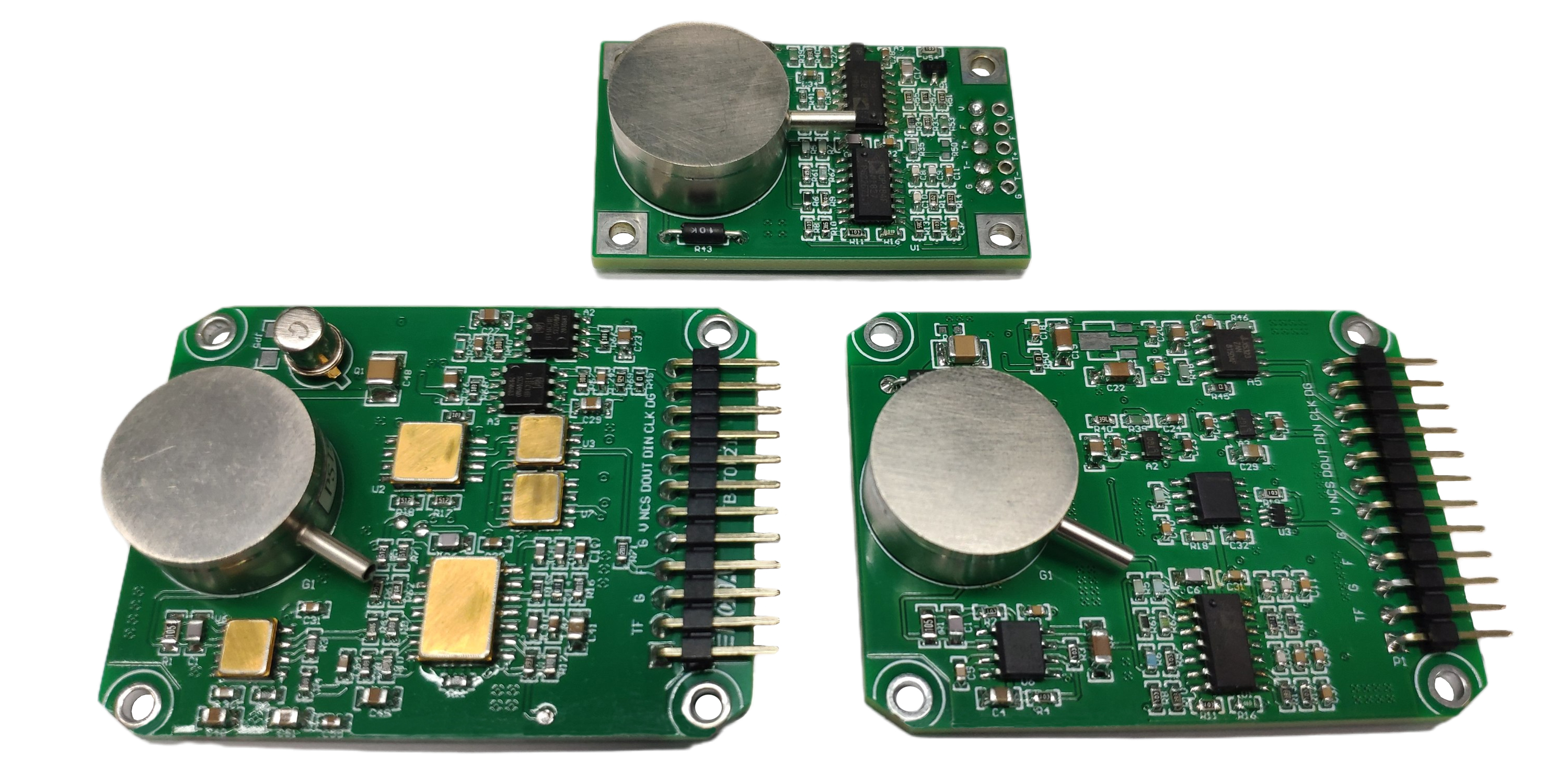
The HTS-SMP01 series silicon resonant pressure sensors feature standardized, minimalist pressure and electrical interfaces. It achieves extreme miniaturization while fully preserving high-precision sensing performance, ensuring ease of installation and removal as well as strong assembly compatibility.
Features Applications
• The comprehensive accuracy across the full temperature and full measurement ranges can reach ±0.01% F.S • Aerospace• The widest temperature range extends from -55°C to 85°C • Oil & Gas Energy
• Pressure-frequency signal output • Meteorological Detection
• Flexible electrical and pressure interface configurations • Marine & Shipbuilding
Performance Characteristics
|
Range |
Pressure type |
Measured medium |
Overload pressure |
|
140kPa |
Absolute pressure |
Dry, non-corrosive gas |
140kPa: 3.0×F.S. |
|
280kPa |
280kPa: 1.5×F.S. |
||
|
350kPa |
350kPa: 1.2×F.S. |
||
|
The calibration range can be freely selected within the range from 0 to the optional maximum pressure, with a minimum calibration pressure of 5 kPa. |
|||
|
Breaking pressure |
Compensated temperature range |
Power supply |
Current consumption |
|
140kPa: 3.5×F.S. |
-40℃~80℃ -55℃~85℃ |
15V±0.5V |
≤30mA |
|
280kPa: 2.0×F.S. |
|||
|
350kPa: 1.5×F.S. |
|||
|
Output method |
Output frequency range |
Overall accuracy |
Response time |
|
Pressure Frequency + Temperature Frequency |
Pressure frequency: 30 kHz–50 kHz |
±0.01%F.S. |
<25 ms when pressure changes from 10% F.S. to 90% F.S. |
|
Pressure Frequency + Temperature SPI |
Temperature frequency:2 kHz–15 kHz |
±0.02 %F.S. |
|
|
Start-up time |
Long-term stability |
Effect of acceleration |
Pressure interface |
|
Reaches accuracy specifications within 250 ms after power-up |
High-precision grade ±0.01% F.S. |
<5 Pa/g |
φ2mm×7mm |
|
Standard grade ±0.02% F.S. |
|||
|
Note: Output format: Both pressure and temperature outputs are square-wave frequency signals, with optional square wave levels of 3.3V TTL and 5V TTL. |
|||
Dimension & Drawing